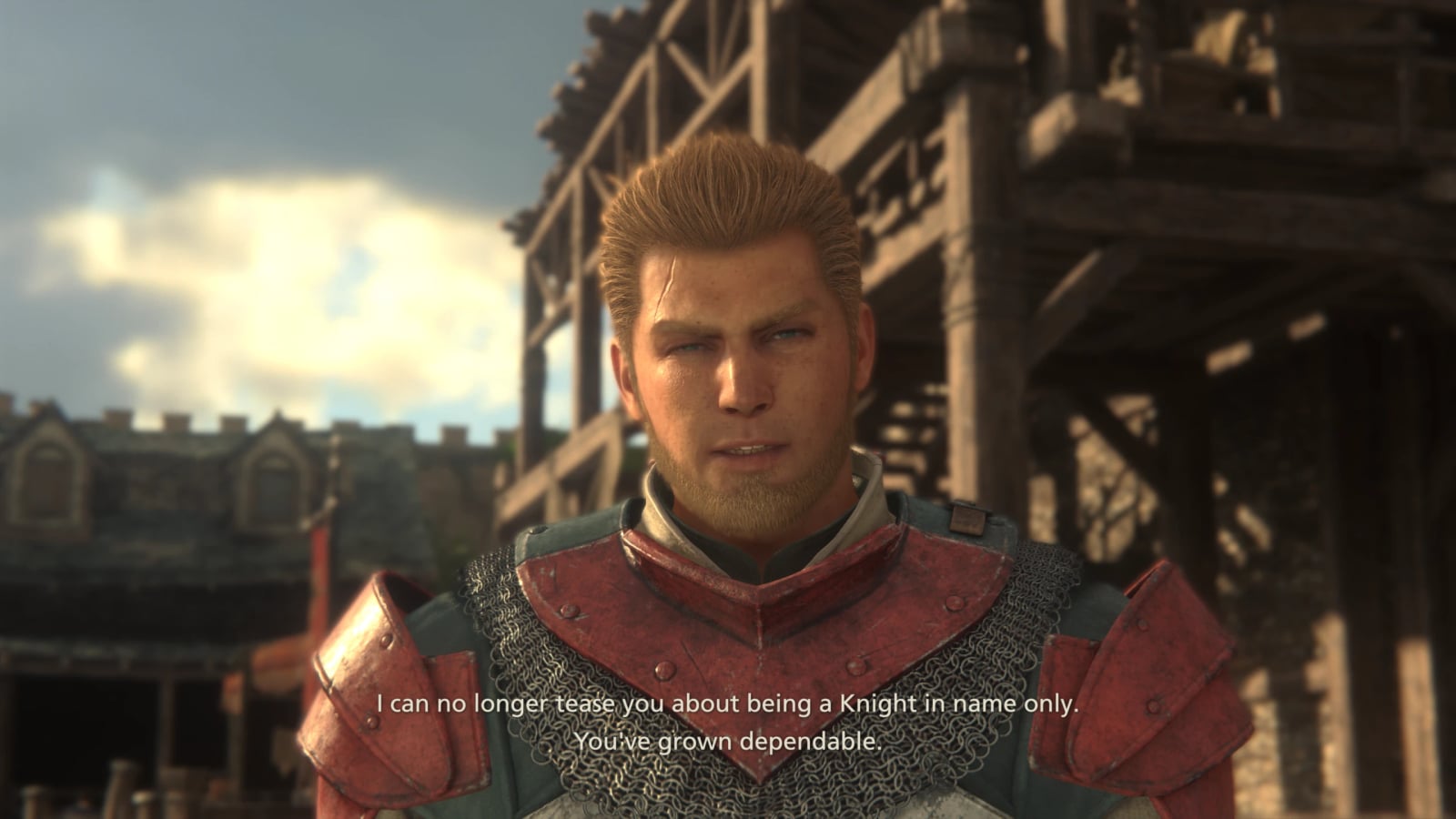
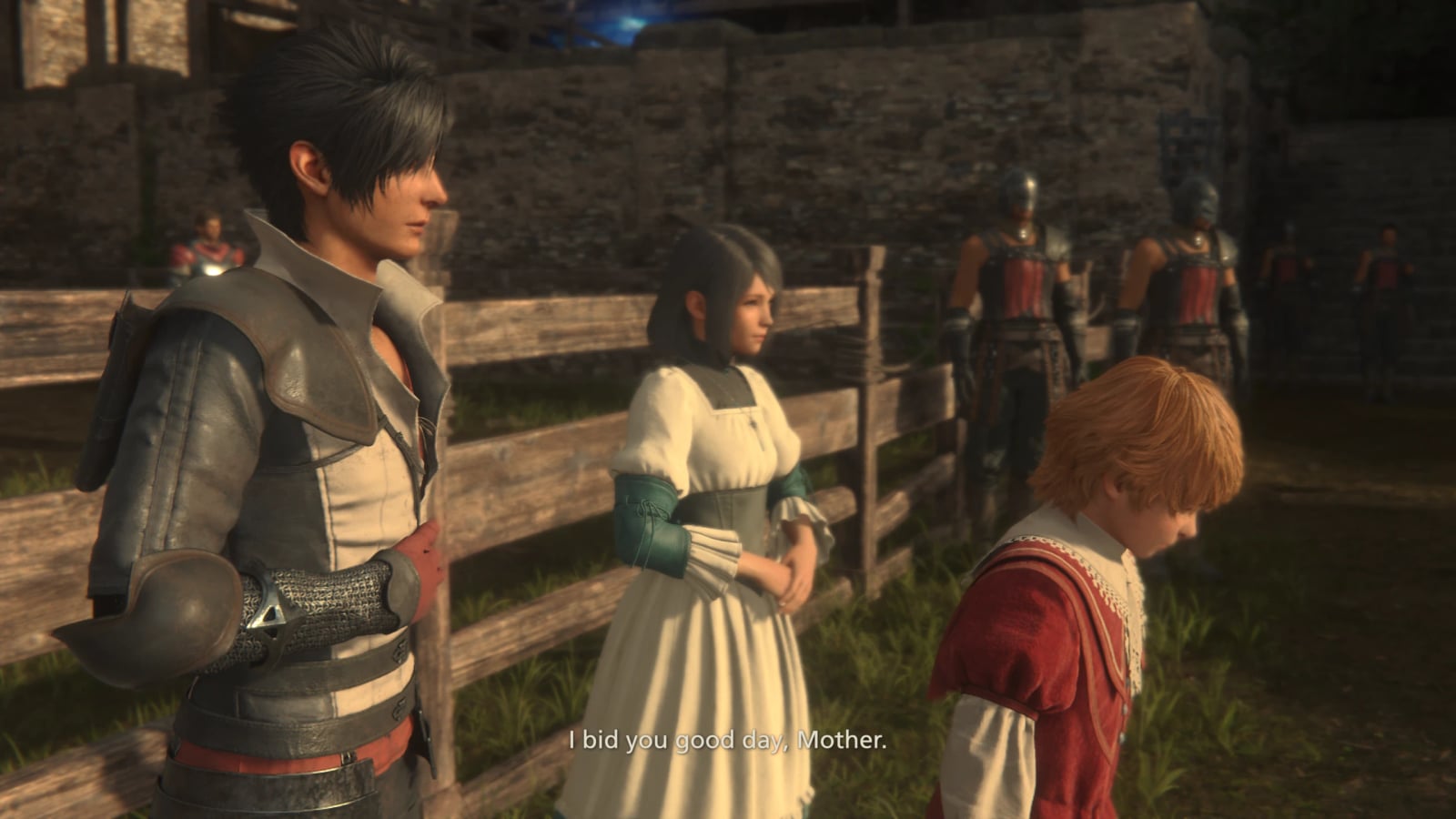
Faithful English Localization v1.1
A Japanese-faithful English retranslation of Final Fantasy XVI, focused on preserving the original script’s meaning, nuance, characterization and tone. This is a complete retranslation of the game’s main script, made directly from the original Japanese and independent of the official English localization.
It aims to present the dialogue as faithfully as possible, preserving meaning, tone, ambiguity, pacing and characterization without reinterpretation, editorialization or modernization.
Features
- Every line was translated from the Japanese.
- Preserves the original script’s meaning, tone, ambiguity, pacing and characterization.
- Preserves restraint, implication, ellipsis, silence, understatement and open-ended phrasing.
- Preserves each character’s distinct voice, manner of speaking and way of addressing others.
- Translates what is written without introducing material or implications that are not in the source.
- Preserves ambiguity instead of resolving it, and leaves what is unsaid unspoken.
- Avoids adding, removing or altering emotional emphasis, judgment, intent or explanation.
- Matches brevity with brevity and silence with silence. A short line stays short, and a vague line stays vague.
Compatibility
Scope and compatibility: This project covers the game’s main script only. UI text and other non-script content, including menus and item descriptions, retain the original localization and terminology. This is intentional: keeping those terms unchanged helps maintain consistency between players using this retranslation and those using the official English script, so both can still refer to the same names and terms without confusion.
This project is intended for players who want to experience the story closer to its original Japanese presentation. It may be particularly appealing to those playing with Japanese audio who want an English script that reflects the dialogue they hear, making it easier to follow along while retaining the original meaning and nuances.
AI disclosure
Please read first: Large language models (LLMs) were used as a support tool to produce the initial translation drafts directly from the Japanese script. I then carried out an extensive editing and review process, checking accuracy, meaning, nuance, characterization, tone and consistency, while refining the English wording and style. I have personally reviewed, edited and refined the translation. Nevertheless, if you are not comfortable with AI-assisted translation, please consider skipping this mod.
Installation
- Back up the original files first. Before installing the mod, navigate to your game’s data folder and copy the following files somewhere safe:
data007.en.pac(Base game)data2002.en.pac(Echoes of the Fallen DLC, if installed)data3002.en.pac(The Rising Tide DLC, if installed)
This allows you to restore the original localization if you decide to uninstall the mod.
Extract the contents of the downloaded archive into your Final Fantasy XVI installation directory, preserving the folder structure.
When prompted, allow the existing files to be overwritten. The mod replaces the following localization files:
data007.en.pac(Base game)data2002.en.pac(Echoes of the Fallen DLC, if installed)data3002.en.pac(The Rising Tide DLC, if installed)
Only files for content you have installed will be present and replaced.
Why this mod exists
While the official English script is a localization, most of the passages I compared feel less like adaptations of the Japanese into natural English and more like reinterpretations or rewrites of the original source dialogue itself. These differences were not limited to isolated wording choices. They repeatedly affected meaning, characterization, tone and the way scenes unfold. Correcting individual lines did not seem sufficient; the more consistent approach was to return to the Japanese source and retranslate the script as a whole.
These are the recurring patterns I found when comparing the Japanese with the official English:
- Rewriting instead of translating. Dialogue is sometimes replaced with newly written material that introduces different motivations, intentions, explanations or reactions. In some cases, entire exchanges are reshaped, changing what characters communicate and how they respond to one another.
- Loss of ambiguity and restraint. The Japanese often relies on implication, ellipsis, silence, understatement and open-ended phrasing. The English sometimes fills these gaps with added explanations, emotional cues or details that are not present in the source. It can also turn an implication into an explicit statement or settle something the original leaves ambiguous. While these additions may make the dialogue more immediately expressive, they can narrow the range of possible interpretations and introduce ideas or nuances that the Japanese does not establish.
- Characterization and voice drift. Changes in wording and delivery can make characters sound more sarcastic, confrontational, witty, sentimental or expressive than they do in Japanese. Distinctive speech patterns and restrained personalities can be replaced by a more uniformly quippy or theatrical style. This affects not only individual lines but also the impression characters leave over the course of the story: their temperament, relationships and the way they express themselves. A character’s voice is part of their characterization, and changing it can change how they are perceived.
- Added moral framing and commentary. Some lines introduce reassurance, condemnation, approval, judgment or commentary that the Japanese does not express, either explicitly or implicitly. Rather than simply presenting a situation or allowing a character’s words to speak for themselves, the English can add an explicit interpretation or steer the player toward a particular reaction.
- Emotional inflation and altered rhythm. Short, understated or hesitant lines are sometimes expanded into more emphatic dialogue, with added exclamations, flourishes, jokes and heightened emotional delivery. This changes the rhythm of conversations: pauses and fragments become fuller statements, quiet moments become more dramatic, and concise exchanges lose some of their original impact. The result can feel more verbose and performative than the source.
- Softening and reframing. Harsh, uncomfortable or explicit implications are sometimes euphemized or replaced with less direct language. In other cases, the underlying subject is changed altogether. This can obscure what a character actually says, alter the severity of their words, change backstories or shift the emotional and thematic weight of a scene.
- A different overall dialogue style. The official English often favors a more embellished, quip-heavy register, turning straightforward observations and simple responses into witty remarks, elaborate flourishes or lines with an added sense of humor. This is not necessarily inappropriate in isolation, but when applied repeatedly, it gives conversations a different character from the Japanese. Even minor exchanges can acquire a playful or theatrical quality that was not present in the original.
Taken together, these patterns affect more than translation accuracy. They change the texture of the dialogue: how characters sound, how they relate to one another, how scenes build and release tension, and how much the script leaves to the player’s interpretation. This project aims to preserve those qualities by translating what the Japanese actually says, including its restraint, ambiguity, rhythm and individual character voices, rather than replacing them with a different style of dialogue.
Translation approach
The retranslation follows a source-text-first approach, with the aim of preserving the original dialogue without unnecessary additions, omissions or changes:
- Translate what is written, without introducing material or implications that are not in the source.
- Preserve ambiguity instead of resolving it, and leave what is unsaid unspoken.
- Avoid adding, removing or altering emotional emphasis, judgment, intent or explanation.
- Match brevity with brevity and silence with silence. A short line stays short, and a vague line stays vague.
- Preserve each character’s distinct voice, manner of speaking and way of addressing others, rather than imposing a uniform dialogue style.
Particular care was taken with characterization and voice consistency. Each character’s speech patterns and manner of expression were considered not only individually, but also in relation to other characters and the circumstances of each scene. Scene-specific analyses were prepared to guide how characters speak, how they interact with one another and how their voices should come across in different situations.
The goal is to preserve the original script’s meaning, tone, characterization and rhythm as closely as possible. This is a preservation effort.
Examples
A few lines that show the patterns above. In each one, the Japanese is first, then the official English, then this mod. These are only a handful of examples, not a complete list.
Some lines come from story scenes, so the examples are in spoilers. Be careful if you don’t want to spoil yourself.
Lady Jayne, answering a question
Japanese: そ そうね
Official: True as the crystal’s cracked.
This mod: W-well, yes.
A hesitant, flustered “well, yes” becomes a witty saying. The joke is not in the Japanese.
Chocobokeeper
Japanese: 俺はオリフレム公に従うつもりなんてないね!最後まで抵抗してやるつもりさ!
Official: If he comes calling, the only thing I’m giving the Duke of Oriflamme is a piece of my mind! …And maybe a smack in the gob.
This mod: I’ve no intention of following the Duke of Oriflamme! I mean to resist to the very end!
A plain statement of defiance becomes a joke with a threat added at the end.
Jill accuses High Priest Imreann
Japanese: 私の目の前で 彼女たちを手籠めにして殺した!
Official: You put them in chains, and you slit their throats!
This mod: Right before my eyes, you violated them and killed them!
手籠めにする means to rape. The official line removes the sexual violence and replaces it with a different act, slitting throats.
Benedikta, to Cid
Japanese: 力だろうが身体だろうが 使えるものは使う!私はそうやって生きてきた!
Official: Sacrifice!? I use my talents to my advantage and you would tell me there is shame in that!?
This mod: Power, body… if I can use it, I’ll use it! That’s how I’ve lived!
She says she uses her body (身体) as a tool to survive or achieve her objectives. The official line changes “body” to “talents” and turns her answer into a defence against shame, an idea that is not in the Japanese.
Jill, on being called a beast
Japanese: 弁えよ 卑しき獣め!貴様のように穢れた血は この神殿への立ち入りすら許されぬということを忘れたか! / そうね…私は獣だった… この血はきっと誰よりも…穢れている…
Official: Repent, abomination! For a monster like you to set foot in the holy Comraich is in itself a crime deserving of death! / You’re right. I am a monster. And my soul is stained black… Though not by aether.
This mod: Know your place, base beast! Have you forgotten that blood as tainted as yours is not even permitted to enter this temple!? / That’s right… I was a beast… This blood is surely more tainted… than anyone else’s…
The Japanese keeps returning to “beast” and “tainted blood”. The official lines swap this for a different religious image, a “soul stained black”, and add “Though not by aether”.
Vivian, on the danger of one “truth”
Japanese: だからこそ 決して誰かの“正しさ”だけで世界を覆ってはならない / それは いつしか必ず価値観の歪曲と思考の拘束を生み出すことになる / ベアラーの歴史なぞ その最たるものだよ
Official: But it also means that the truth is not immutable. That it can be changed. / Provided that those who wish to change it can convince enough people that their perspective is the correct one. / As the sad history of the Bearers proves.
This mod: That is why we must never let anyone’s “truth” alone shroud the world. / Before long, that is bound to breed the distortion of values and the binding of thought. / The history of the Bearers is a prime example.
The Japanese warns against one person’s idea of “right” covering the world, because it distorts values and binds thought. The official line argues something else: that truth can be changed by convincing enough people.
Wade, on Anabella’s motive
Japanese: あの女 アナベラは…自分の子が統べる国家から不要なものを取り除きたいのかもしれません
Official: As to why, I don’t know. Maybe she can’t bear the thought of anyone having the power to challenge her beloved son.
This mod: That woman, Anabella… may wish to remove everything unnecessary from the nation her own child will rule.
The Japanese is a guess and does not say what she wants to remove. The official line supplies a specific motive and an emotion, “beloved son”.
Delphine, on the strange object
Japanese: あれを見てると、胸がざわざわしてくる…。
Official: There’s something about it… I feel like it’s… calling to me…
This mod: Looking at that makes my chest go all uneasy…
The Japanese only describes an uneasy feeling. The official line adds an explanation the speaker never gives: that the object is “calling” to her.
Dion
Japanese: ご安心を 民には手を出さぬよう伝えてあります
Official: Fear not. The populace will come to no harm at their hands.
This mod: Rest assured. I have given orders that the people are not to be harmed.
In Japanese, he says what he has ordered. In the official line, he promises what will happen, which is a stronger claim.
Hortense
Japanese: フーゴの野郎をやっつけて!きっとよ!
Official: You give that rotten sod exactly what he deserves!
This mod: Beat that bastard Hugo! I know you can!
The Japanese asks him to win, with faith that he can. The official line has an expansion issue and adds a moral judgment about what Hugo “deserves”.
Dying Republican soldier
Japanese: フーゴ様からは極悪非道と聞いていたんだが 明らかに想像とは違う気が…
Official: Lord Kupka told us of your crimes! You are an outlaw! A murderer! Not some… Some…
This mod: Lord Hugo told me he was a ruthless monster, but you’re nothing like what I pictured…
A hesitant second thought, “you’re not what I pictured”, becomes a string of shouted accusations.
Denis
Japanese: ベアラーなんて 魔物にやられて壊れちゃえばいいのに 余計なことしちゃって パパが知ったら怒るぞ
Official: Father will have you whipped for this! Bearers aren’t supposed to win! They never win!
This mod: You Bearers should just get wrecked by monsters. Coming in and ruining things, Papa’s gonna be mad when he finds out.
A sulking child’s complaint becomes a shouted threat of a whipping, with a new claim about Bearers added.
A closer look at Cid
Cid is a useful case study, because the lines below pull his voice in several different directions. They come from different scenes. This is an analysis and a comparison, not a verdict on the official localization.
Some lines come from story scenes, so the examples are in spoilers. Be careful if you don’t want to spoil yourself.
Japanese: すっかり日が暮れちまった
Official: So much for arriving before sunset.
This mod: It’s gotten completely dark.
A simple observation becomes a quip.
Japanese: わけが分からねえよ…
Official: Though I’ll be damned if I know what that means…
This mod: I don’t get it…
A short, blunt admission gets a colorful tag.
Japanese: 裸を見る趣味はない
Official: Pretty as you are, you’re not my type.
This mod: I’ve no interest in seeing you naked.
A dry refusal becomes a flirtatious, joke compliment.
Japanese: 死にたければ いつでも殺してやる
Official: I reckon I can take you, if that’s what you want.
This mod: If you want to die, I’ll kill you anytime.
In Japanese this is a sarcastic joke: if Clive no longer wants to live, Cid can help, and he does not mean it seriously. The official line turns it into a remark about whether Cid could win a fight.
Japanese: 安心しろ お前をどうこうしたいわけじゃない
Official: Calm down. I didn’t come all this way for your handsome mug.
This mod: Relax. I don’t intend to do anything to you.
A plain reassurance gets a joke about the other person’s face.
Japanese: すまんな 助かったぜクライヴ
Official: Not quite as spry as I used to be.
This mod: Sorry about that. You saved me, Clive.
The thanks to Clive is replaced by a joke about himself.
Japanese: あれを受け流すとは やるじゃねえか!
Official: Not bad! But don’t get cocky.
This mod: Deflecting that… not bad at all!
A compliment gets a teasing warning attached.
Japanese: 火の召喚獣に2体目がいた… 噂は事実だってのか?
Official: The Phoenix’s evil twin… Well, bugger me. Another rumor proven true.
This mod: There was a second Eikon of Fire… So the rumors are true, then?
A question of disbelief becomes a nickname and an exclamation.
Japanese: ああ… 俺もクライヴも それどころじゃなかったからな
Official: Good question. Someone who didn’t have their hands full fighting a bloody harpy, at a guess.
This mod: Yeah… Clive and I weren’t in any state for that.
A short answer becomes a sarcastic reply.
Japanese: こんなところに住む馬鹿はいない 魔法も使えず 草木も生えない土地にな / それが世間の常識でね
Official: The Blight’s sucked this place dry, meaning no trees, no birds, and no magic. / But it also means no neighbors.
This mod: No fool would live in a place like this. A land where magic won’t work and nothing grows. / That’s the common wisdom.
The Japanese is dry: this is what everyone believes, and he lives there anyway. The official line adds a punchline about neighbors.
In the official English, Cid often has a comeback, a sarcastic remark or a clever turn of phrase ready for almost every line. Sometimes he adds a joke to a plain remark, sometimes he flirts jokingly, and sometimes a plain remark or answer becomes banter. Taken together, it can feel as though he is always performing for an audience and always has something prepared to say. That can cut into the tension of a scene and change its rhythm, and over a long game it can get tiring, as if Cid always wants to be the funny one.
This style of writing is often called “quippy” dialogue, and it is a common point of discussion in modern films and games. When every character is witty, their voices start to blur together, serious moments lose some weight, and conversations can start to feel like a string of punchlines.
The Japanese Cid works differently. He is funny and charismatic because of how he talks: rough speech, informal contractions, bluntness, sardonic observations, how stoic and casual he is compared to other characters and a dry joke now and then. His character helps with rhythm by providing contrast: his bluntness and casual manner keep conversations grounded, while his occasional dry humor breaks that pattern without overwhelming it. He does not need to be funny in every line, so the jokes land when they come.
In the English localization, sometimes it can feel as though the scenes were written mostly from what is happening on screen, almost as if they were watched on mute, with the original script as a loose guide. That is an understandable way to localize a scene, and many of the resulting lines can be entertaining on their own for some players. It’s a valid approach. This mod simply takes the other route: it follows what the Japanese actually says and lets Cid be funny when the original is funny, while maintaining his original characteristics and qualities.
Speech patterns and character voice
A character’s way of speaking is part of who they are. These lines show how it can change between the Japanese and the official English. This localization project focuses on preserving the original characters’ voices.
Some lines come from story scenes, so the examples are in spoilers. Be careful if you don’t want to spoil yourself.
In Japanese, Ultima speaks in a formal, archaic register throughout, which gives her a distinct voice. In this localization, that is rendered using an archaic English register.
Japanese: 主に仇なし さらに罪を重ねるつもりとは…
Official: And still you would raise your hand against the Lord.
This mod: To defy thy Lord and heap yet more sin upon sin…!
The official line is in plain modern English, and the “more sin upon sin” is gone.
Japanese: 人よ 拝伏せよ…!
Official: Only with heads hung low is penance paid.
This mod: O Man, prostrate thyself…!
A command to bow becomes a statement about penance, a concept the Japanese line does not mention.
Japanese: いくら抗おうとも 汝らの犯した罪が消えることはない
Official: Such foul attaint may not be sublimed through gainstanding.
This mod: No matter how ye resist, the sin ye have committed shall never be erased.
Here the official English is archaic too, but it uses rare words, so the meaning is harder to follow, and the style differs from line to line. The Japanese stays in one consistent register.